
Vanity Fair.
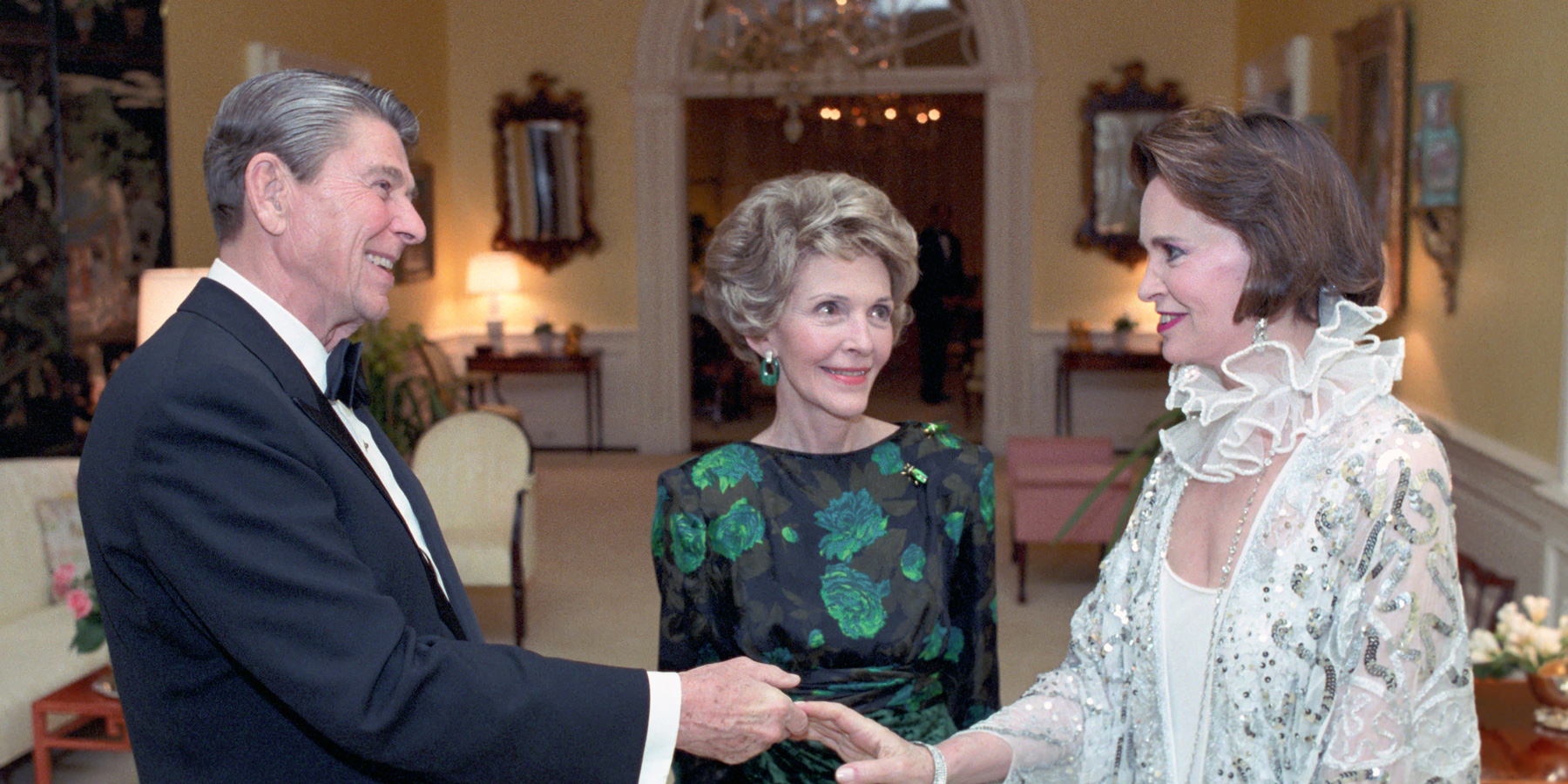
Heiress to one of the richest American dynasties, Gloria Vanderbilt has seen it all. Fame, fortune, love, and tragedy. JOHN VON SOTHEN retraces the destiny of the woman who inspired Breakfast at Tiffany’s and designer jeans, while harkening back to a lost age – when America once had royalty.
There must have been a moment when the last dinosaur walked the earth, the final link to a time many in the future could never imagined existed. At 94, Gloria Vanderbilt, may be the last of her species.
For nearly a century now, Vanderbilt has been defined by her name, one associated with American wealth and opulence, industry and power, but also ruin, tragedy, and the worst affliction to hit any great family, extinction.
At the time of her birth, the Vanderbilts were the richest family in the world. They even had more money than the US government. And their subsequent making and spending of that wealth would reach a scale unseen since 18th century Versailles.
In a way, the Vanderbilts were “Aristocracy a l’Americain,” whose self-made fortune in shipping and railroads would be lost as fast as it was made. And the family who once hoped to become the Rothschild or Hapsburg dynasty of the US would soon disappear into obscurity, leaving behind young Gloria as the last one standing.
However Gloria Vanderbilt’s story is not just one of a family whose rise and fall is a metaphor of America, but of a modern day woman, one whose long life bridges multiple generations and speaks volumes of the current age we’re living in.
In many respects, her life is a fairy tale. At the age of five she was one of the wealthiest people in America. She once dated Frank Sinatra and married the director, Sidney Lumet. She acted along side Rita Heyworth, had two children with the famous conductor Leopold Stokowski. She posed for Vogue, Cosmopolitan, and Town and Country. She was the first woman to design a successful line of luxury jeans in her name. She wrote novels. She painted, and she was even the muse of famous photographer Richard Avedon, artist Salvador Dali and writer Truman Capote.
Yet in other ways, her life is classically tragic. She lost her father before she could walk. She was taken from her mother at the age of ten in a bitter custody battle. She lost her husband, Wyatt Cooper, early in what was her first stable marriage, then later witnessed her twenty year-old son Carter commit suicide in front of her, jumping from their Park Avenue apartment. All along the way, Gloria would watch as Vanderbilt mansions were sold, the companies they created died off, replaced by a modern America whose Kennedys and Gateses and Zuckenbergs had no use and no interest in the years of splendor she grew up in, a time historians called the “Gilded Age.”
As her son, the CNN correspondent Anderson Cooper, once said, “My mother is an emissary from a distant star.” And if you didn’t meet her in real life, quietly sitting on the couch in the corner of her New York apartment, you wouldn’t believe people like this even existed.
The Vanderbilts
To best understand Gloria, we must first comprehend the wealth and importance of her family.
Originally Dutch, the Vanderbilts had come to America as early as the 17th century, when New York was first a Dutch colony known as New Amsterdam. And for hundreds of years, they did very little other than eke out a meager existence like many of the early American settlers.
But their fortunes would suddenly change with Cornelius Vanderbilt, a brazen young boat captain, whose idea to transform his oyster boat into a ferry that serviced Staten Island and Manhattan would eventually lead him to buy a second boat, then a third, then a fourth. Before long, Vanderbilt had become wealthy, and by the time he exited the shipping business twenty years later, the Vanderbilts owned more ships than the US Navy.
Like many self-made men, Vanderbilt’s energy was borderline psychotic. At the age of 60, he embarked on a second career with railroads, applying the same ruthlessness and competitiveness that served him in shipping. Rates were cut and competitors were bought out, allowing Vanderbilt to consolidate local railroads under one company with one standard service. Soon Cornelious Vanderbilt controlled more railroads than anyone in the country, making the Vanderbilts the wealthiest family in America. At the time, there was no income tax, which even added to the Vanderbilt’s colossal fortune. At their apex, the Vanderbilts would have more money than the US government and the greatest personal family fortune in the world.
Although Cornelius’s heirs proved to less adept at building the fortune, they were certainly talented at spending it, eventually creating some of the most spectacular architecture in America. Massive apartments or houses were too small for the Vanderbilts. Theirs needed to be large scale Gothic urban kingdom castles the size of Vaux le Vicompte, plopped down in the middle of New York taking up entire blocks. Cornelius’s son William and his wife NAME would host balls for thousands of people at their home at 640 Fifth Avenue, between 57th and 58th – the current site of Van Cleef and Arpels and Bergdorf Goodman. Their parties could only be outdone by his brother Cornelius Jr. Name, whose home three streets down, was twice the size.
etc. etc. etc